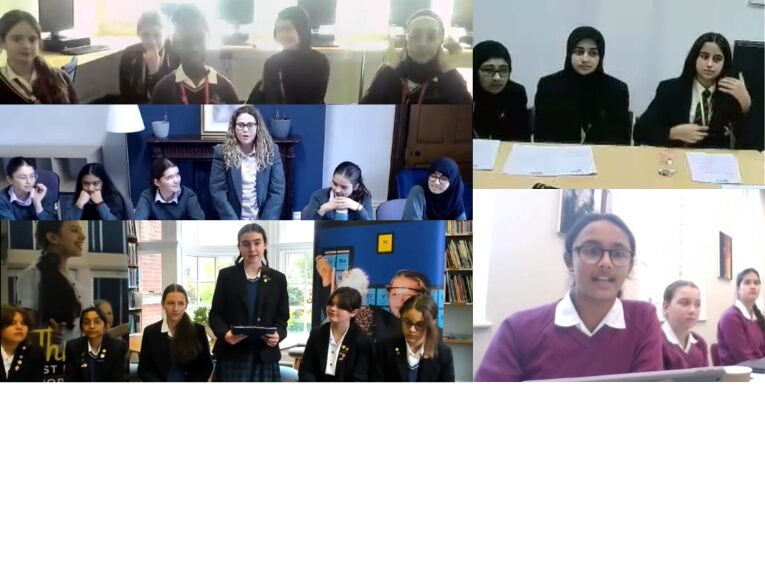
The Girls’ Schools Association (GSA) is pleased to announce the successful completion of the inaugural pilot year of its Girls’ Research Association (GRA), launched in May 2025.
The programme empowered Year 7 and Year 8 pupils across member schools to design and carry out original investigations on topics of social, educational, and cultural significance – stepping into the shoes of researcher-investigators and presenting findings to the GSA Research Committee.
During this pilot, students from multiple girls’ schools, including state and independent, formed cross-school pairs or groups, choosing or investigating questions that mattered to them.
Projects included:
- “What factors contribute to young female players discontinuing amateur football?” from The Ellen Wilkinson School for Girls & Bedford Girls’ School. Drawing on over 580 responses, they identified social pressures, limited facilities, injuries, and time constraints as key reasons for declining participation, particularly at the Year 7 transition point.
- “To what extent is empowering girls as leaders essential to advancing gender equality?” from St Mary’s School for Girls & Farnborough Hill School. Exploring academic achievement and structural barriers and concluding that leadership opportunities significantly boost girls’ confidence and aspirations by highlighting the influence of visible female role models.
- “The impact of social media on the mental wellbeing of teenage girls.” from Batley Girls’ High School highlighted concerns around comparison, insecurity, and body image while also acknowledging the benefits of social connection and learning.
These findings not only demonstrate the enthusiasm and capacity of younger students in girls’ schools to engage with substantive research topics, but also highlight the vital role of research-based learning at an early stage. The full papers are published on GSA’s website in the GRA section.
Why this matters:
- It gives students a genuine research experience – from question formulation, data collection and analysis to presentation.
- It fosters cross school collaboration in the interests of all girls’ schools, peer learning, and research literacy in the early secondary phase.
- The topics chosen speak directly to issues affecting young women: participation in sport, leadership opportunities, and digital wellbeing.
- By investing in such initiatives, GSA further strengthens its mission of championing girls’ education, unlocking potential, and providing unique enrichment.
Looking Ahead
The success of this pilot paves the way for broader rollout. In 2026 the GRA will open to more schools and offer enhanced professional development for participating teachers – ensuring the programme evolves into a sustained component of the GSA research ecosystem.
“Watching these young researchers take ownership of their questions, dig into the data and confidently present their findings has been exceptionally rewarding. They’ve shown what happens when curiosity is nurtured early, when girls are invited to ask the big questions and to lead the enquiry themselves. This pilot confirms that girls’ schools are not just places of academic excellence – they are vibrant research communities in the making.” Donna Stevens, chief executive, GSA.
Watch a short video on the project