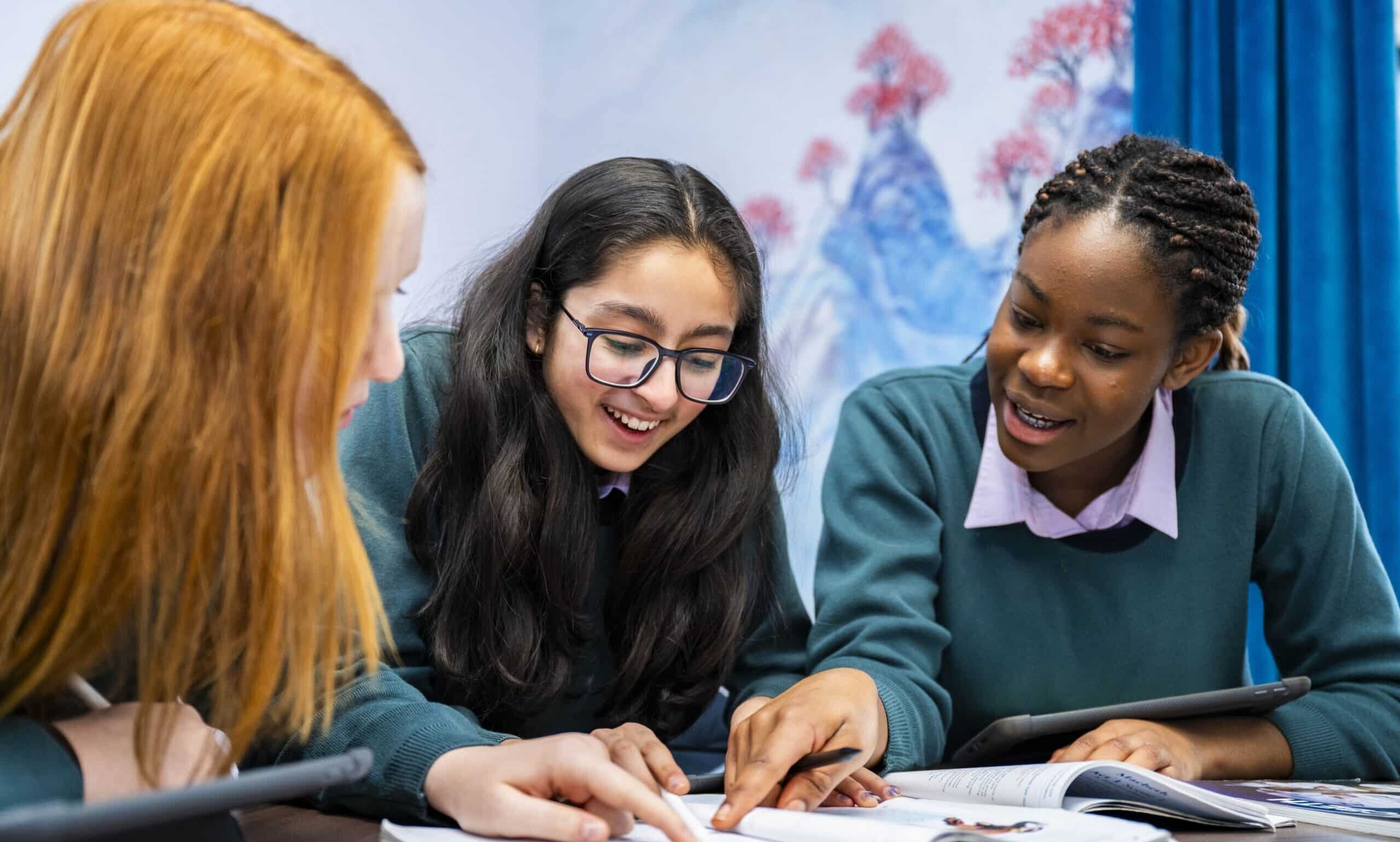
Now in its second year, the GSA Research Association gives Year 7 pupils moving into Year 8 the opportunity to develop research skills and explore important topics in collaboration with fellow girls’ schools.
Cross-school pairs decide on a shared research question and then conduct their own investigations, producing short research papers which they present to the GSA Research Committee, the research is then uploaded here to the GSA website and all participants receive a GSA certificate.
Please note, as these projects are produced by pupils as part of an educational initiative, they have not undergone the formal quality-assurance process applied to GSA’s official research publications. The papers are shared here to celebrate the pupils’ work and showcase the topics that inspire them.
2026 Research Projects:
- The Ellen Wilkinson School for Girls & The Bedford Girls School on ‘What impact has pain management bias had on secondary school girls’ physical health and well-being across three generations?’
- Batley Girls’ High School & Norwich High School for Girls on ‘Does gender inequality still exist in the media in the 21st century?’
- Farnborough Hill & St Julie’s Catholic High School on ‘What Are the Biggest Barriers Preventing Gender Equality in Sport Today?’
- St Mary’s School, Colchester & Sir Jonathan North’s Girls’ College on ‘Does social media influence girls away from sport?’
2025 Research Projects:
- The Ellen Wilkinson School for Girls & The Bedford Girls School on ‘What factors attribute to young youth team female players in their decision to not continuing playing amateur football?’
- St Mary’s School for Girls & Farnborough Hill School on ‘To What Extent Is Empowering Girls as Leaders Essential to Advancing Gender Equality in UK Education and Politics?’
- Batley Girls’ High School on ‘The impact of Social Media on the Mental Wellbeing of Teenage Girls’
Girls Research Association Launch 2025

What impact has pain management bias had on secondary school girls’ physical health and well-being across three generations?
The Ellen Wilkinson School for Girls, November 2026
Drawing on questionnaires completed by students and 10 parents and grandparents, the study explores experiences of pain management at secondary school across three generations. Current students gave the help they received an average rating of 67%, although 15% rated their support at 40% or lower. Menstrual pain emerged as a particular concern, with some reporting dismissive responses and limited access to period products. Year 7 pupils described the most positive experiences, while older pupils reported greater difficulties seeking support.
Comparisons with older generations suggest increased awareness of girls’ pain, although the small adult sample limits wider conclusions. The project developed students’ questionnaire design and analytical skills around a shared research question agreed with Bedford Girls’ School. Recommendations include improved medical facilities, access to hot water bottles and sanitary products, greater staff understanding, and more flexible bathroom policies to ensure fairer, more consistent support.
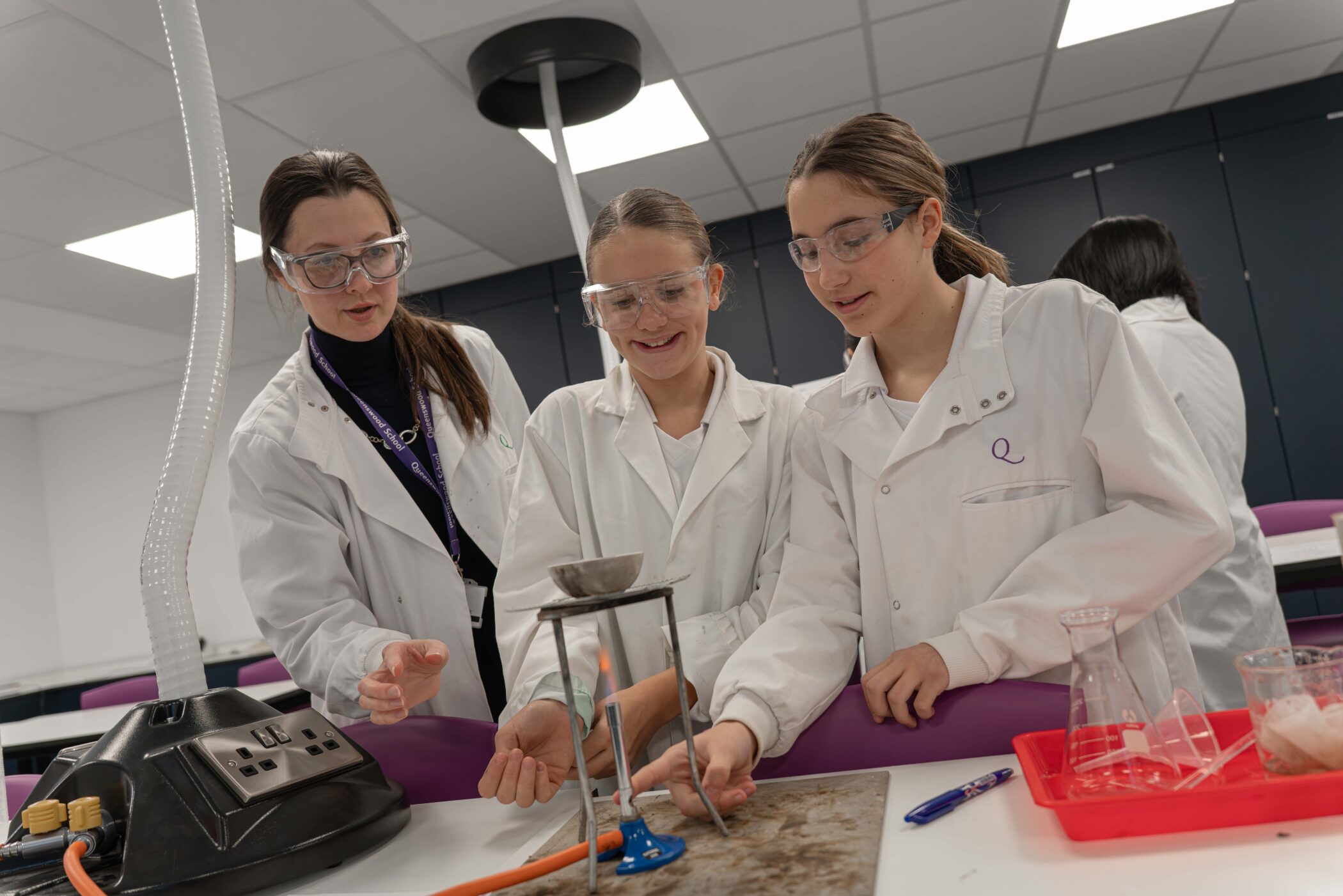
What impact has pain management bias had on secondary school girls’ physical health and well-being across three generations?
Bedford Girls’ School for Girls, November 2026
Drawing on a survey across three generations, the study examines changing experiences of pain management at school. Among secondary school respondents, 52.9% reported reluctance to discuss their pain, while 58.8% said an adult, teacher or sports coach had dismissed or underestimated it. Half of older respondents considered their pain something to ignore, compared with 18% of current pupils, suggesting differences in attitudes towards acknowledging pain.
Developed around a shared question agreed with The Ellen Wilkinson School for Girls, the project gave students experience of questionnaire design and cross-generational analysis. Menstruation featured in one third of additional comments from secondary school respondents, prompting recommendations for further research into menstrual pain and barriers to seeking support. The report acknowledges its limited sample of 51 responses and highlights the importance of listening to individual experiences.

Does gender inequality still exist in the media in the 21st century?
Batley Girls High School, November 2026
Drawing on responses from 193 Year 7 pupils, the study explores perceptions of gender inequality in contemporary media. Most respondents expressed inclusive views: 80.3% felt leaders could be any gender, and 82.4% expected television presenters to be either male or female. However, 49.7% believed men won the most sporting awards, compared with 5.7% choosing women. Written responses also highlighted appearance pressures on female social media creators.
Comparing survey findings with published research encouraged students to examine the gap between expectations of fairness and inequalities within media industries. The project developed skills in survey design, data analysis and evaluating evidence. Students recommend greater coverage of women’s sport, stronger training pathways for women entering technical media careers, and more media literacy teaching. Future research could include other schools and group discussions to explore pupils’ views more deeply.

Does gender inequality still exist in the media in the 21st century?
Norwich High School for Girls, November 2026
Drawing on an anonymous survey of 26 Year 7 pupils, the study explores gender stereotypes in perceptions of singers and superheroes. Groups answered equivalent questions about male or female performers: 33.3% selected clothing as an important quality for female singers, compared with 7.1% for male singers. In contrast, a drawing task found that 69% of participants depicted a female superhero, suggesting that female characters were prominent in their ideas about heroism.
The project developed students’ skills in comparative question design, anonymous research and recognising potential bias. Students suggest that female role models at school and in popular culture could help explain the superhero findings, although the survey cannot establish their cause. With its small sample from one school, the research offers an insight into how appearance expectations can coexist with positive perceptions of female strength and capability.

What Are the Biggest Barriers Preventing Gender Equality in Sport Today?
Farnborough Hill, November 2026
Combining published research with a questionnaire completed by 27 staff members, the study examines public attitudes, media coverage, stereotypes, sponsorship and pay as barriers to gender equality in sport. Eighteen respondents preferred watching men’s sport, compared with four who preferred women’s sport. Although 26 believed stereotypes about women had improved over the past 50 years, only one reported buying from a sponsor of women’s sport, compared with nine buying from sponsors of men’s sport.
The project gave students experience of combining survey findings with wider evidence about the sporting industry. Their analysis explores how limited visibility and sponsorship can reinforce one another, restricting resources and recognition for female athletes. While the small staff sample limits wider conclusions, the report calls for greater media coverage, increased investment, fairer pay and more opportunities for girls to pursue their sporting ambitions.

What Are the Biggest Barriers Preventing Gender Equality in Sport Today?
St Julie’s Catholic High School, November 2026
Drawing on a survey of GCSE PE students and published research, the study examines education, advertising, sponsorship, pay and stereotypes as barriers to gender equality in sport. Among respondents, 69% believed women were not fairly represented in the media, while 80% felt stereotypes affected women in sport. Written responses highlighted negative comparisons, male dominance and fear of judgement. Meanwhile, 71% believed pay differences were the main factor behind women leaving sport earlier.
The project developed students’ experience of gathering survey evidence and comparing it with wider research. Respondents’ views highlight concerns about representation and financial inequality, although they do not establish the causes of athletes leaving sport. Acknowledging its sample of fewer than 50 pupils, the report calls for better sporting opportunities, visibility, financial support and attitudes so that girls and women feel supported and valued.

Does social media influence girls away from sport?
St Mary’s School, Colchester, November 2026
Drawing on an anonymous survey of 40 pupils across Years 7–10, the study explores social media’s influence on girls’ sporting participation. Twenty-three respondents said it had encouraged them to try a sport or exercise activity, while 26 felt motivated by female athletes or fitness influencers. However, 19 reported appearance-related pressures, and half had compared their appearance or fitness with people online. Despite this, 29 had never avoided sport because of concerns about appearance, photographs or online judgement.
The project developed students’ skills in reviewing literature, designing surveys and analysing numerical and written responses. Findings suggest that social media can encourage participation while negatively affecting some girls’ confidence, although the small sample cannot establish causation or represent all girls. The report recommends promoting positive sporting content focused on ability, enjoyment and participation, with larger surveys and interviews proposed to deepen future research.

Does social media influence girls away from sport?
Sir Jonathan North’s Girls’ College, November 2026
Drawing on an anonymous survey of 58 Year 8 students, the study explores whether social media influences girls away from sport. Although 36% spent more than two hours daily on social media, 60% participated in sport outside PE at least twice a week. However, 54% had chosen social media instead of physical activity at least sometimes. Views of its overall impact were mixed: 35% considered it positive, 29% negative, and 36% felt it had no impact.
The project developed students’ questionnaire design and analytical skills, alongside their ability to compare findings with published studies. Only 12% agreed that social media affected their sporting confidence, suggesting that competition for time may be more noticeable than confidence-related effects within this sample. The report concludes that social media can both encourage and distract from sport, depending on how it is used and on individual experiences.

What factors attribute to young youth team female players in their decision to not continuing playing amateur football?
The Ellen Wilkinson School for Girls & The Bedford Girls School: November 2025
Drawing on responses from over 580 girls aged 11–13, the study identifies the key reasons why many disengage from grassroots football during early secondary school years. Findings highlight that social pressures (15.5%), lack of facilities (23.3%), injuries (21.4%), and time constraints (28.6%) are the leading contributors to girls discontinuing the sport. Many respondents also reported feeling unequal treatment compared with male players, reflecting wider cultural barriers within youth football.
The research further suggests that Year 7 is a pivotal point for declining participation, likely linked to the transition to secondary school and increased academic or social pressures. The students recommend future studies exploring primary-age engagement, to understand how early experiences shape later participation.
Beyond its findings, the project offered students first-hand experience of primary research methods, data analysis, and cross-school collaboration, deepening their understanding of gender inequality in sport. The report concludes that sustained investment, inclusive environments, and early encouragement are essential to keeping girls engaged in football and sport more broadly.

To What Extent Is Empowering Girls as Leaders Essential to Advancing Gender Equality in UK Education and Politics?’
St Mary’s School for Girls & Farnborough Hill School: November 2025
The report finds that while girls frequently outperform boys academically, this advantage does not automatically translate into leadership or political representation. Persistent structural and cultural barriers—combined with limited exposure to female role models continue to constrain girls’ aspirations for senior positions. However, where girls are encouraged to lead, given opportunities for visible responsibility, and see women represented in decision-making roles, they demonstrate markedly greater confidence and ambition to pursue leadership pathways.
Through analysis of prominent political and educational figures, from Margaret Thatcher and Theresa May to Malala Yousafzai and Michelle Obama, the research highlights the impact of women who model leadership and challenge stereotypes. It further emphasises the importance of inclusive strategies, particularly for girls with special educational needs, and evidence-based teaching approaches that recognise gendered learning differences.

The impact of Social Media on the Mental Wellbeing of Teenage Girls
Batley Girls’ High School: November 2025
The study found that 35.8% of participants use social media to compare themselves to others and 19% feel insecure as a result, reflecting wider research linking online activity with anxiety and low self-esteem.
While students recognised benefits such as communication and learning, the findings highlight growing concerns about body image and unrealistic beauty standards. From a GSA perspective, this research provides important insight into how girls engage with digital spaces, emphasising the role of girls’ schools in promoting digital awareness, self-confidence, and mental wellbeing.

