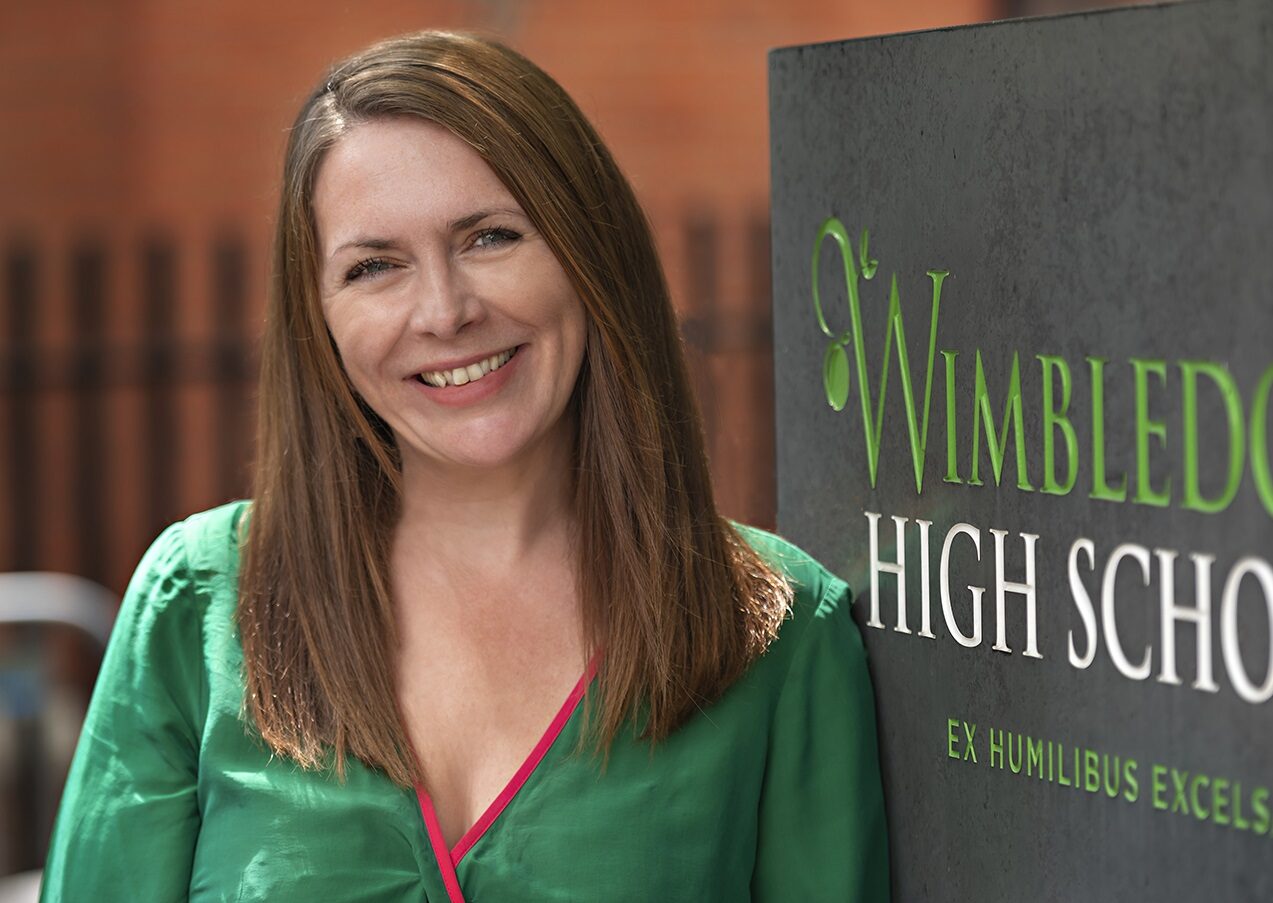
We sat down with Fionnuala Kennedy, Head of Wimbledon High School GDST, to find out more on what she thinks about online misogyny and its performance extremism for clicks and cash – and why she argues that schools cannot afford to look away.
Louis Theroux’s recent documentary Inside the Manosphere and the fictional drama series Adolescence moved the conversation about online misogyny into the mainstream and the family living room – for much-needed discussions. Boys are being radicalised in plain sight. Girls are being told, often by some of their peers, that they are disposable. Many men setting the cultural tone at the very top – politicians, podcasters, music artists and more – are modelling exactly the worldview we are asking schools to dismantle.
Let’s start with the word itself manosphere. A catchy, useful, shorthand – or misogyny dumbed down that lets too many people off the hook?
What a fantastic question! Not only because catchy and clickbait-worthy phraseology is itself part of the issue here, but also because we should always be wary of anything which too neatly summarises something complex and dangerous. It’s also interesting to me that it’s the architects of the ‘manosphere’ who have named it thus, not those negatively impacted by it, or critiquing it; so, it’s certainly not a pejorative term, but rather a description of a lucrative and pervasive online world which these people have constructed for themselves. It’s ironic and even frustrating, then, that feminists are using it so frequently in order to attempt to dismantle it – and of course every time we mention it online, it gives it more of a platform!
That said, I don’t think this is about misogyny being dumbed down or diluted in some way. What is really terrifying is that in fact the misogyny being peddled is in itself the most saleable commodity. No one needs to hide behind an acceptable facade of equality because – in 2026 – it’s the very open and aggressive misogyny which is most lucrative.
You say that this isn’t just a teenage boy ‘problem’ and that it runs all the way up to politicians, journalists, podcasters, and influencers. How much of this is a youth culture issue and how much is it actually a failure of young people by the establishment and older generations?
I think this links to the point just made. The polarisation of views which has been creeping up on us for the last decade thanks to the development of social media platforms – which actively encourage and reward rage-bait and extremity of thought – mean that a tipping point has inevitably been reached. And this tipping point is represented not only in behaviours – from our wealthiest business moguls and most powerful politicians to husbands in their marital homes and teenagers in their local communities – but also in the representations and discussions of these behaviours in drama, documentaries and other media. It can feel a bit exhausting when it’s something you care about and have responsibility for in your day-to-day life just in terms of the frequency with which examples of extreme misogyny feature in our print and online press, but I think this is just an accurate reflection of the deeply regressive phase in which we – sadly – seem to find ourselves.
Leading a girls’ school what are your girls telling you and what can we do in our schools to help?
Our girls remain thoughtful and articulate in their exploration of all forms of prejudice and discrimination, as reflected in Dr Catherine Carr’s recent R4 series About the Girls. We were lucky enough to be included via the filming of one of our Civil Discourse classes, where the girls were discussing women in positions of political power and the observations they had around them perhaps feeling they need to lean into right wing spaces in order to ‘compensate’ for being female, as well as the growing trends of (to their minds, ‘ludicrous’) ‘trad wives’ movements and notions of traditional gender roles in the home. They are very alive to the fact that the world outside of our school seems to be moving backwards for women, and that there is significant work to be done if this is to be corrected. They also see a myriad of concerning and sometimes frightening things online where the fact of their gender means they are represented as lesser and – even though intellectually they understand this not to be true – it can seep into their psyche, nonetheless. So, one of the key things is to find ways to ensure the relentless nature of this messaging is not impacting girls’ sense of self-worth, against their better judgement.
Girls’ schools have always made the case that they are spaces where girls can be ambitious, loud, and fully themselves. Does this cultural moment make that case more urgent, or harder, to sustain?
Both! Although to be honest, everything at the moment feels more urgent and a little bit harder!
What we do know for certain is that in the society we see around us – online or otherwise – the case for girls-only spaces has never been stronger. When the air that you breathe, daily, for the most formative years of your life, is one of empowerment, psychological safety, ambition and challenge, that can only be both a gift and a privilege. And then when you combine that with it being designed for girls, with girls at its centre – what better way to prepare these young women to go out into our world knowing their worth, and ready to tackle some of these issues head on.
We can’t afford to demonise boys while we protect girls. How can we best protect the lives of all our young people, and how do girls’ schools lead on this?
Not one thing about speaking up against misogyny is about demonising boys. Indeed, what we are trying to fight is further polarisation and division, upon which we know the manosphere absolutely thrives. If anything, the 2026 iteration of misogyny seems to be based on boys and young men who feel isolated and utterly separate from a world of girls and women, so bringing us all together in the conversation is crucial. Girls’ schools are central to this because they are world-leaders in empowering girls, so can offer so much to co-ed schools in their thinking around what truly equal education would and should look like, and how to ensure unconscious bias is stamped out in all communities. It isn’t about protecting girls; it’s about creating an environment which caters to how they learn best and prepares them for life beyond school. If you don’t know you’re being discriminated against – or indeed if you’re being discriminatory – it’s very much more difficult to do something about it.
Parents and carers – where are they in this and what’s the single most useful thing they can do tonight?
They couldn’t be more important. Teenagers may not show it, but we know from research (and in fact what they tell us at school) that parents are the most influential role models in their lives. Open conversations which have sharing at the heart of them, rather than judgement, are key here. Your teen won’t tell you everything – some may say very little! – but they need to hear you modelling emotional honesty and the importance of a values-driven and compassionate life. You act as their yardstick of acceptable behaviour, whether you like it or not! It’s also crucial that they know they can come to you in a crisis and that you will walk alongside them, whether you approve or not, with consequences being meted out once the crisis is dealt with. Finally, don’t assume because they are quietly in their room for hours on end that all is fine. Check in, ask questions, insist on family time where you can – space is important, but consistent isolation is never healthy for teens, or indeed for any of us.
Openness, boundaries, care and consistency – these are the foundations of navigating the teenage years.