
A relaxing garden park, a centre of scientific excellence in botanic research, a place to wonder at nature in so many forms, a surprising artistic venue, a refuge for people and plants. Our year 8 day trip to Kew was intended as an opportunity to splice different subjects together. A visit for questioning the ‘why?’, of plants, while delighting in the ‘what?’, of biodiversity. It was all enhanced by the bold natural forms of Henry Moore’s sculpture and drawings, and the brave observant botanical paintings of the intrepid 19th Century artist Marianna North.
Elianah 8K
‘My favourite part of Kew Gardens was the Treetop Walkway. It is made from over four hundred tonnes of steel. The platforms are supported by diagonal struts which are connected to a central column, which helps spread weight. There are also gaps and holes in the structure to make it lighter but still strong. I really enjoyed seeing the trees from above and the amazing wildlife!
We then walked to the Temperate House, which is over one hundred and fifty years old and made from glass, iron and concrete. The whole area was well looked after for example the iron was painted to stop it from rusting.
When we went inside the Temperate House, there were many different rooms for different climates such as Arid and Tropical. The glass was designed to let the sunlight in, and it also helps keep the heat inside. The different temperatures create the right conditions for rare and exotic plants to grow. It was very interesting seeing all the different types of plants and how they were varied depending on which room you went into.
Overall, I really enjoyed going to Kew Gardens as it was very insightful seeing how science and art can intertwine to create something amazing.’
Sienna 8L
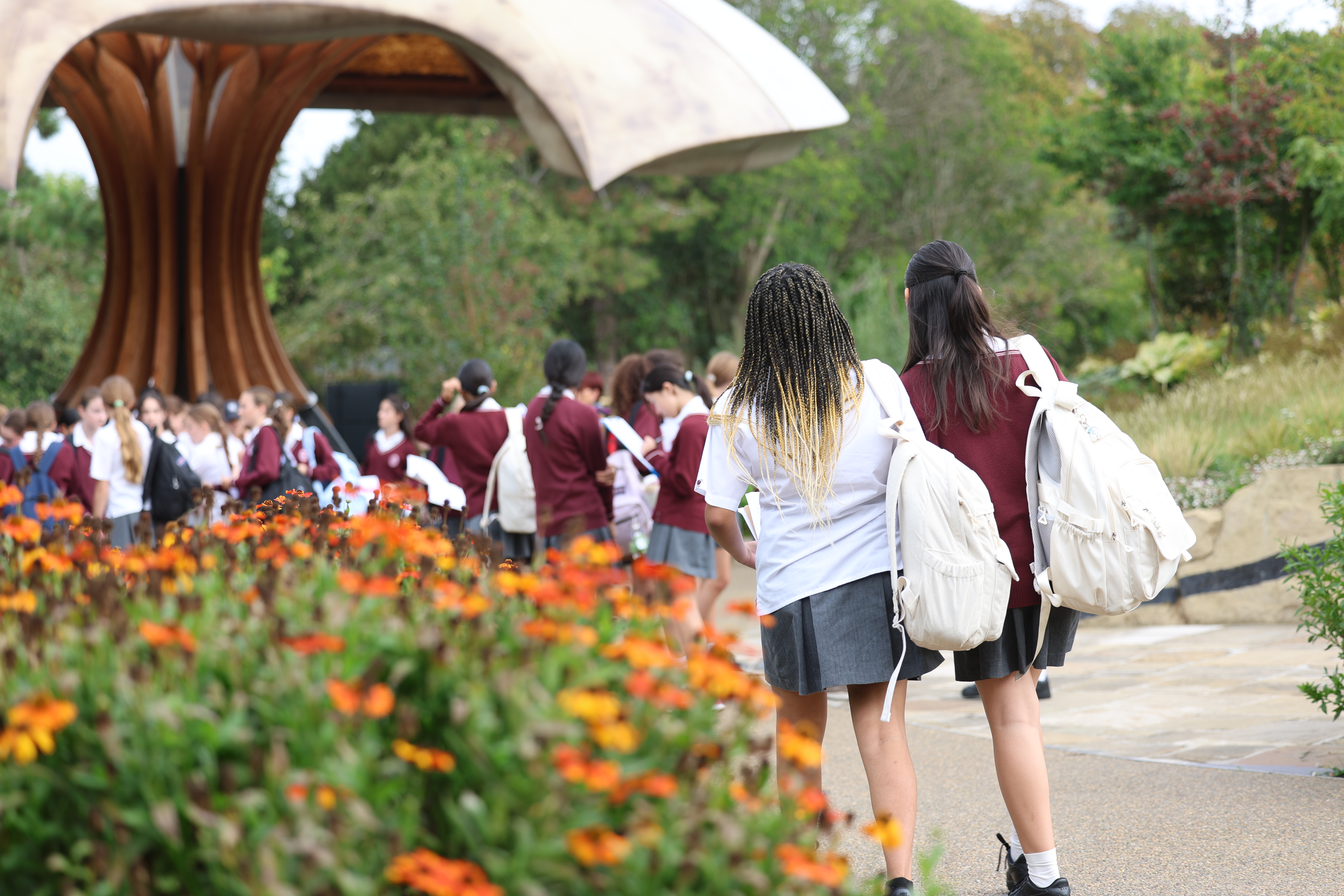
‘I enjoyed Kew Gardens very much and found so much interesting. One of my favourite things about it was the Princess of Wales Conservatory glasshouse. It was full of cacti of different shapes and sizes. After visiting the arid area of the glass house, we went through to a tropical zone where there were huge fish and two meter lily pads. The Carbon Garden was also very interesting. It’s called the carbon garden because there it is a display that explains the carbon cycle and the importance of carbon to life on earth. In the centre there was a massive architectural mushroom which is not only for display because it funnels water to the gardens as well.
Our trip to Kew was an enjoyable event and we hope students will go back taking family in the future to enjoy the many other parts of this rich and varied wonder.’