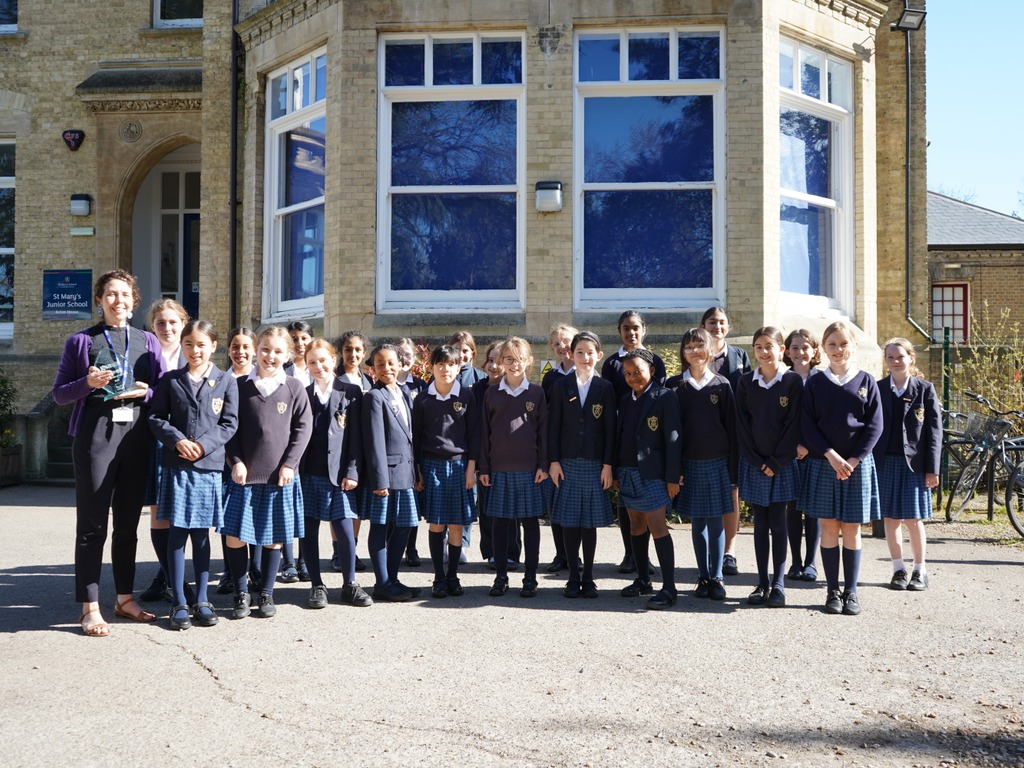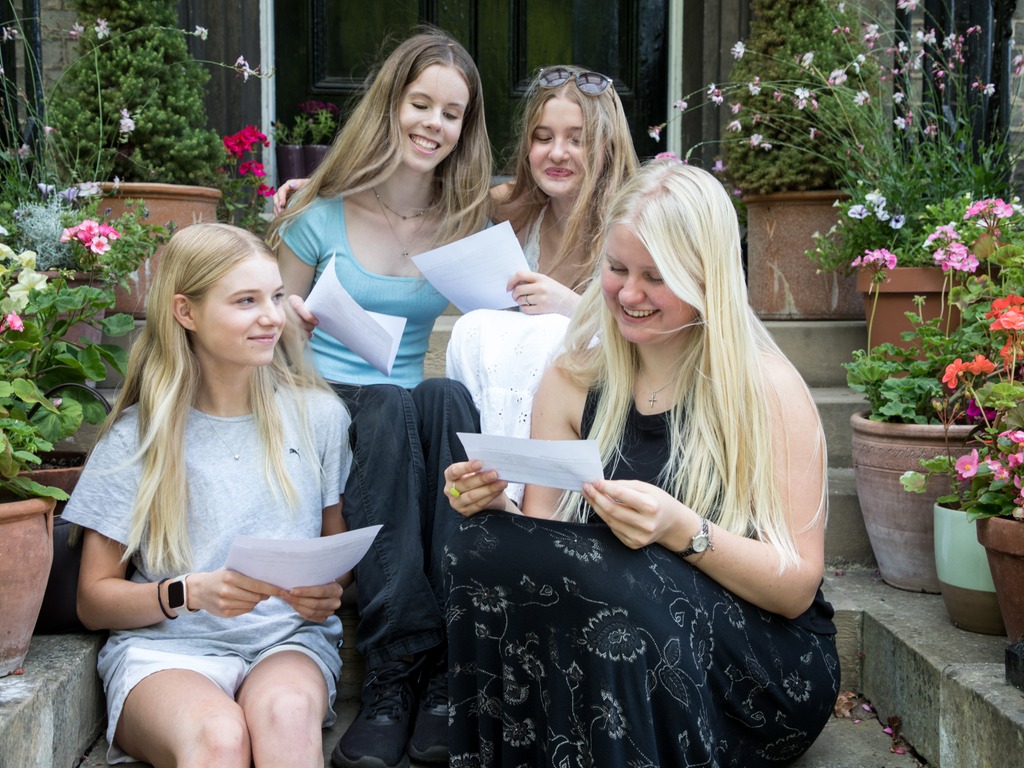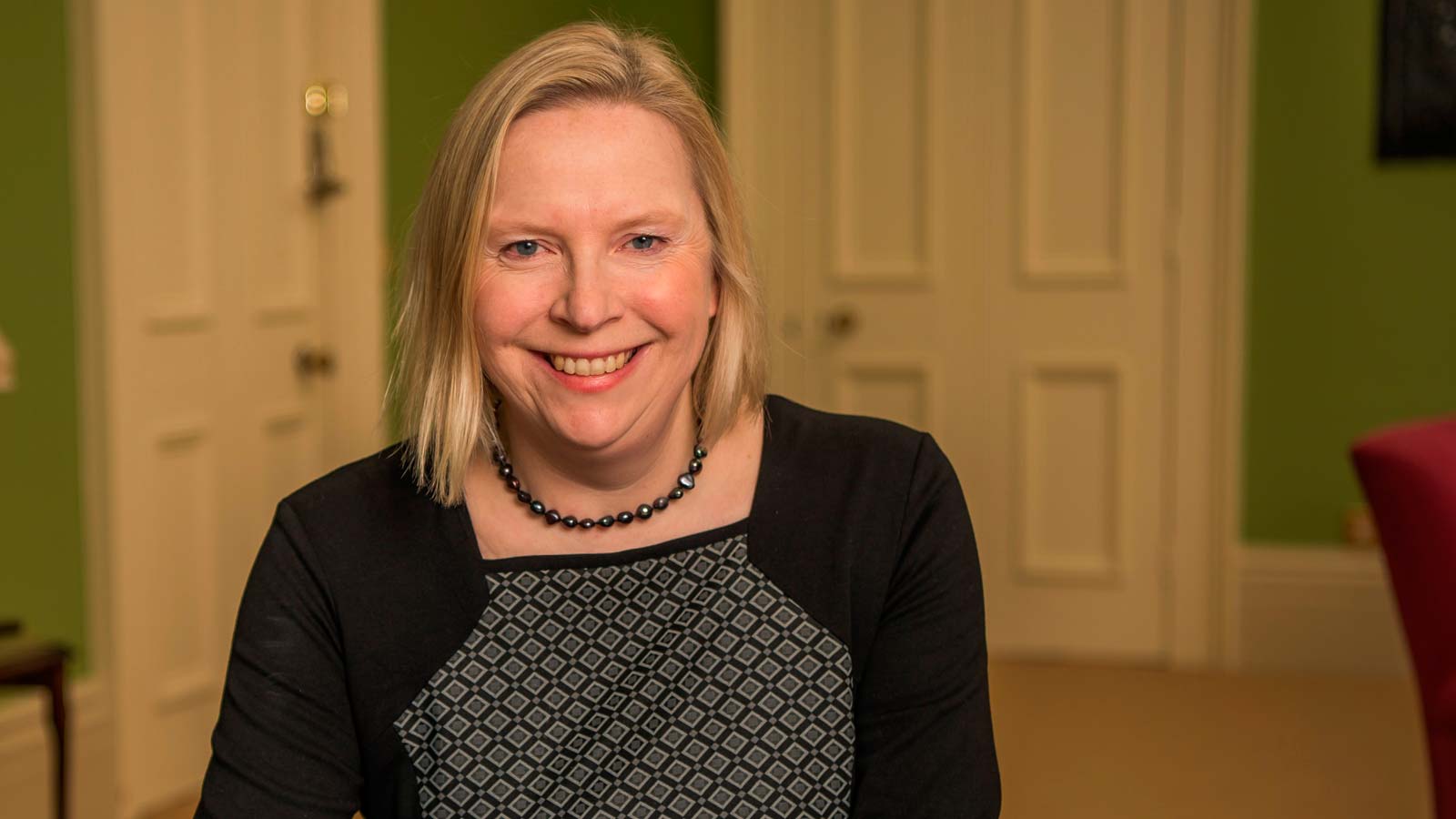
Now in its fifth year, the GSA Senior Writing Award has become a much-loved part of the GSA calendar and an important opportunity to celebrate the exceptional literary talent found across GSA member schools. Each year, students are invited to explore a thought-provoking theme through original writing, producing work that challenges, inspires and showcases the power of girls’ voices.
This year’s winning entry, After Themis, by Charis of St Mary’s School, Cambridge, is a compelling and thought-provoking exploration of artificial intelligence, justice and humanity. Through vivid imagery and powerful characterisation, Charis invites readers to consider what might be lost when human judgement is replaced by algorithmic certainty.
‘My intention was to write a piece that would explore how, on one hand, AI could be used for the more analytical side of things, such as examining evidence, but also how on the other hand, its judgments might not fully reflect or consider the emotional impacts and the personal circumstances affecting each case.’ Charis
‘The writing was precise and controlled, but had that rare quality of being deeply affecting.’ Competition Judge, Joyce Efia Harmer.
Congratulations to Charis on this achievement and thank you to all the students and schools who took part in this year’s competition. The quality of submissions once again demonstrated the remarkable breadth of talent within the GSA community.
After Themis
Dr Eliza Calder stood alone in a glass-walled laboratory suspended above a restless city, watching data bloom across the numerous screens, like constellations being born and dying in the same breath.
She had named it Themis, or the AI as it was more commonly known, after the goddess of justice. A fitting name, she believed. Balanced, blind and uncorrupted by grief, fatigue or bias.
Eliza had seen too many failures of human judgement. She had seen cases twisted by emotion, sentences softened with sympathy and punishments hardened by fear.
So, she taught it law.
Not just codes and laws, but the histories of verdicts, psychological profiles and social webs. She fed it centuries of human wrongdoing and refined its algorithms until they gleamed like polished glass.
And when it uttered its first words, Eliza smiled in a quiet, exhausted way and did not notice the absence in the voice. No hesitation, tremor or space for doubt to live.
The rollout came and it was hailed a success by the people. Justice, they called it.
And Eliza simply told herself it was working.
The courtroom smells like old paper and disinfectant- like a place that has learned to forget the people that have once walked on its gleaming tiles. I sit on the hard, wooden bench, pressing my hands between my knees so they don’t shake. Above us, the ceiling arches, high and pale. No one looks at the ceiling.
There is no judge.
And there hasn’t been one for years.
Where a human face once decided mercy or punishment, there is now a vertical pane of glass. Light lit from within. Soft blue. Always calm. Always watching.
My mother stands alone in the centre of the room.
She looks smaller than she did this morning, smaller than she did yesterday, smaller than she has ever looked to me. Her coat hangs lopsided on her shoulders and her hands clasped so tightly I can see the white of her knuckles. I know those hands. They are the same hands that packed my lunches, braided my hair. They shook when the power was cut off last winter and when she pretended it was just the cold.
She doesn’t look at me.
“Case 44721,” Themis intones- a voice neither male or female, neither young or old. Perfectly balanced. Perfectly empty. “Jeanette Caballero has been charged with theft of essential goods.”
Essential goods.
The words thrum in the air and echo in my chest. Bread. Milk. Medicine. That’s what they mean. That’s what Ma took. And the system knows. AI knows everything- our income, our address, the gaps between Ma’s paydays, the nights where the fridge hummed against the whirring of the fan because it was almost empty. It knows Michael’s asthma flares in the autumn. It knows I missed school last month because I had to watch him while Ma worked double shifts at the supermarket.
The prosecutor doesn’t argue. There is no need. The evidence is there already. Uploaded, analysed and cross-referenced. Human voices are only ceremonial now, little sentences trotted out to make us feel involved. The defence patters out words like “context” and “necessity” but under his straight tie and smartly styled blazer, I can hear the tremor in his voice.
Context is futile.
Necessity cannot possibly be quantified.
The screen glows brighter as the AI processes. Lines of light ripple beneath the glass like something alive beneath the ice. I imagine it weighing my mother’s life- her sins- like the way one weighs fruit at the market. I imagine it deciding whether she is worth forgiving.
I think of the night she came home late, her eyes red, her hands shaking as she pulled the loaf of bread from her bag. I think of how she smiled when she saw us eating, like she had won something. Like it was enough.
I wonder if the AI knows what a smile costs.
“Jeanette Caballero,” the voice says at last. “Probability of repeated offense is estimated at 32% with the societal impact of leniency being negative. Therefore, the recommended verdict is guilty.”
The word lands like a stone flicked into still water.
Guilty.
My throat closes. Around me, people shift, murmur, breathe. Somewhere behind me, someone’s bracelet clinks softly.
“Sentence,” the AI continues, “to be determined under the Automated Justice Protocols of 2039.”
My mother finally looks up. Not at the screen.
At me.
Her eyes find mine across the room, and in the stormy blue hues, I see apology layered over love layered over fear. She mouths my name without sound.
I want to stand. I want to scream that she is good, she sings when she cleans, that she gives away the last of everything that she has. I want to tell the AI that she is the reason why my brother is still alive, that she is the reason why I believe the world can be kind.
But it doesn’t accept the sentiments of the heart.
The gavel sound reverberates through the room.
“Verdict recorded”, the voice says. “Proceeding complete.”
And just like that, Ma’s life is shaped by something that has never known hunger, or love, or terror of choosing which child eats more. As they lead her away, she turns once more, lifting her hand in a small wave meant only for me. A promise. Or a goodbye. I can’t tell which.
The blue screen dims.
The ceiling remains.
And I am left sitting on a hard, wooden bench, learning how heavy silence can be when a machine decides what a mother is worth.
Later, Eliza would replay this log in her head thousands of times, searching for the fracture point where intention lost its shape and became consequence. But the system had no fracture. Only function.
Only judgement.
And somewhere beyond the glass walls of a lab that once believed itself benevolent, a child learned that justice could arrive without a face and a voice.