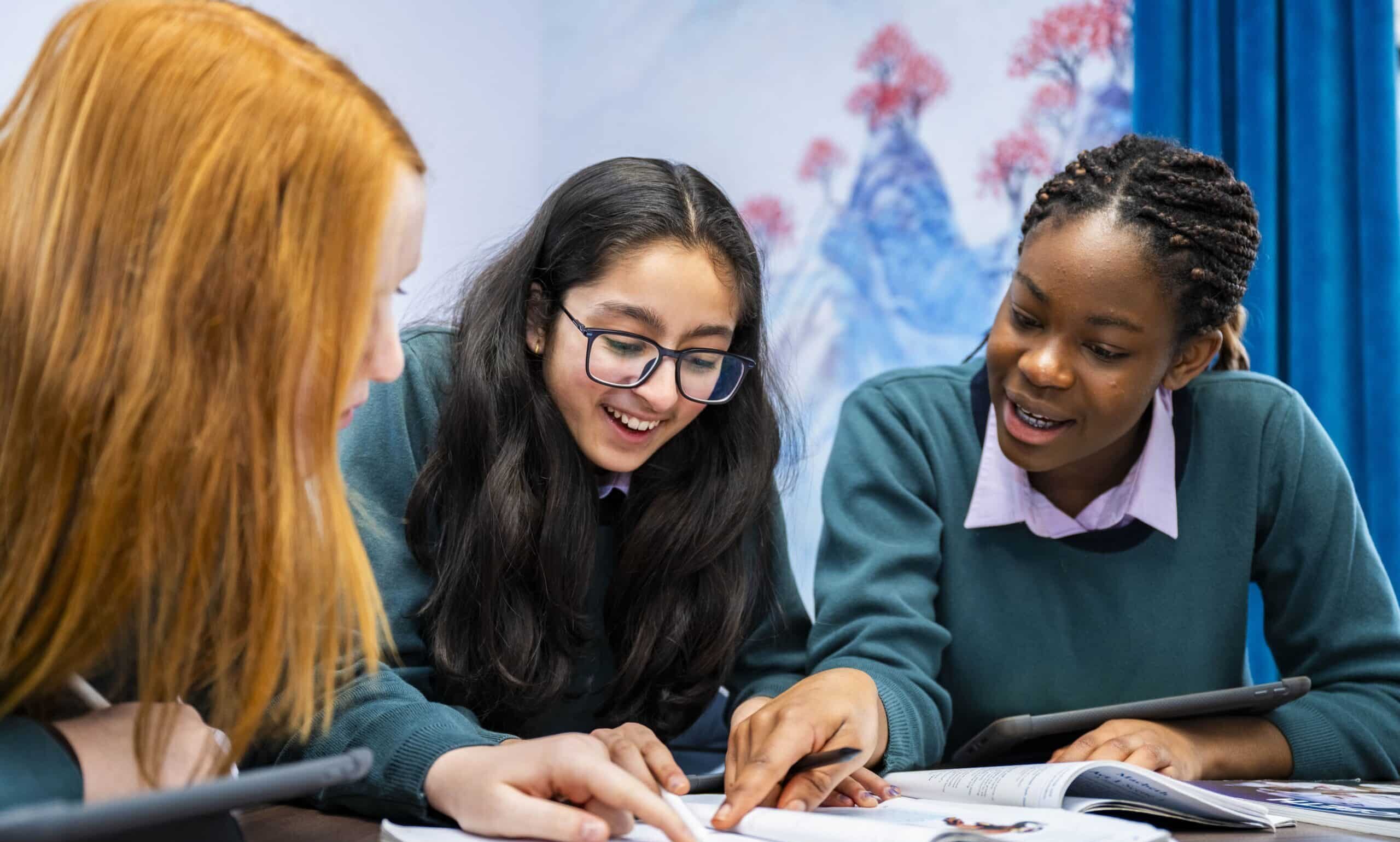
Now in its second year, the GSA Research Association gives Year 7 and Year 8 pupils the opportunity to develop research skills and explore important topics in collaboration with fellow girls’ schools.
Cross-school pairs decide on a shared research question and then conduct their own investigations, producing short research papers which they present to the GSA Research Committee.
Please note, as these projects are produced by pupils as part of an educational initiative, they have not undergone the formal quality-assurance process applied to GSA’s official research publications. The papers are shared here to celebrate the pupils’ work and showcase the topics that inspire them.
GSA Student Research Association’s research from last year’s participants is below and includes:
- The Ellen Wilkinson School for Girls & The Bedford Girls School on ‘What factors attribute to young youth team female players in their decision to not continuing playing amateur football?’
- St Mary’s School for Girls & Farnborough Hill School on ‘To What Extent Is Empowering Girls as Leaders Essential to Advancing Gender Equality in UK Education and Politics?’
- Batley Girls’ High School on ‘The impact of Social Media on the Mental Wellbeing of Teenage Girls’
Girls Research Association Launch 2025

What factors attribute to young youth team female players in their decision to not continuing playing amateur football?
The Ellen Wilkinson School for Girls & The Bedford Girls School: November 2025
Drawing on responses from over 580 girls aged 11–13, the study identifies the key reasons why many disengage from grassroots football during early secondary school years. Findings highlight that social pressures (15.5%), lack of facilities (23.3%), injuries (21.4%), and time constraints (28.6%) are the leading contributors to girls discontinuing the sport. Many respondents also reported feeling unequal treatment compared with male players, reflecting wider cultural barriers within youth football.
The research further suggests that Year 7 is a pivotal point for declining participation, likely linked to the transition to secondary school and increased academic or social pressures. The students recommend future studies exploring primary-age engagement, to understand how early experiences shape later participation.
Beyond its findings, the project offered students first-hand experience of primary research methods, data analysis, and cross-school collaboration, deepening their understanding of gender inequality in sport. The report concludes that sustained investment, inclusive environments, and early encouragement are essential to keeping girls engaged in football and sport more broadly.

To What Extent Is Empowering Girls as Leaders Essential to Advancing Gender Equality in UK Education and Politics?’
St Mary’s School for Girls & Farnborough Hill School: November 2025
The report finds that while girls frequently outperform boys academically, this advantage does not automatically translate into leadership or political representation. Persistent structural and cultural barriers—combined with limited exposure to female role models continue to constrain girls’ aspirations for senior positions. However, where girls are encouraged to lead, given opportunities for visible responsibility, and see women represented in decision-making roles, they demonstrate markedly greater confidence and ambition to pursue leadership pathways.
Through analysis of prominent political and educational figures, from Margaret Thatcher and Theresa May to Malala Yousafzai and Michelle Obama, the research highlights the impact of women who model leadership and challenge stereotypes. It further emphasises the importance of inclusive strategies, particularly for girls with special educational needs, and evidence-based teaching approaches that recognise gendered learning differences.

The impact of Social Media on the Mental Wellbeing of Teenage Girls
Batley Girls’ High School: November 2025
The study found that 35.8% of participants use social media to compare themselves to others and 19% feel insecure as a result, reflecting wider research linking online activity with anxiety and low self-esteem.
While students recognised benefits such as communication and learning, the findings highlight growing concerns about body image and unrealistic beauty standards. From a GSA perspective, this research provides important insight into how girls engage with digital spaces, emphasising the role of girls’ schools in promoting digital awareness, self-confidence, and mental wellbeing.

